
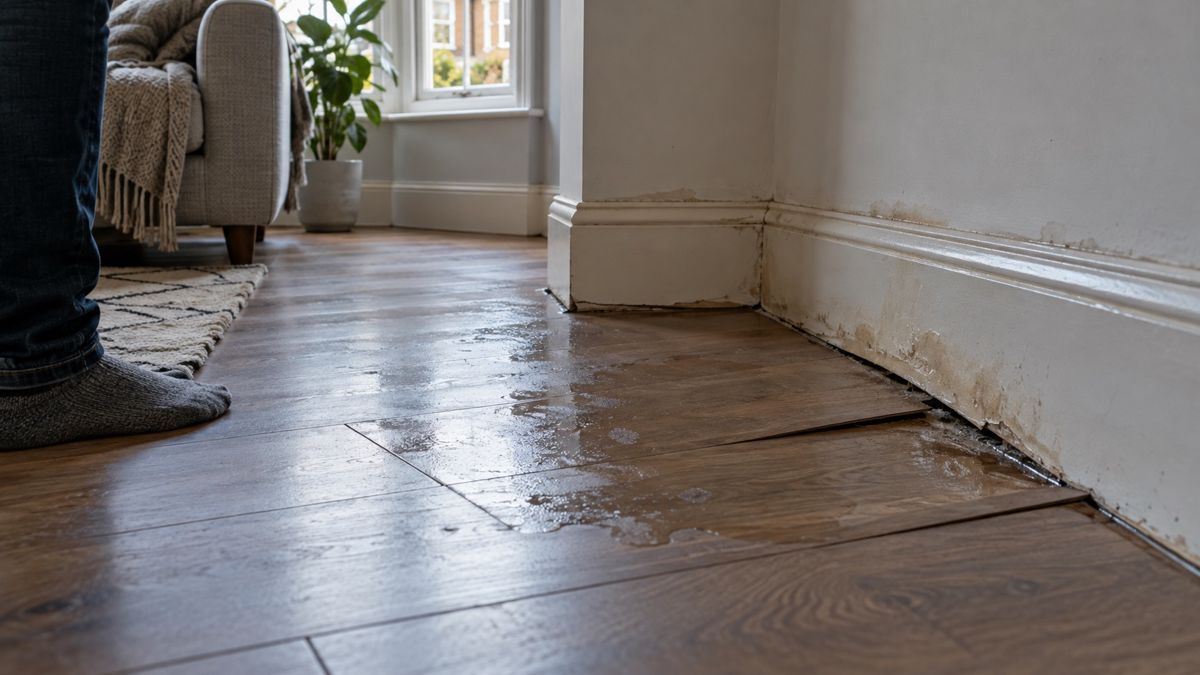
The short answer is this. If your water bill climbs for no reason, you can hear water running when everything is off, or a patch of floor feels damp or warm, you may have a leak in a pipe under or inside a solid floor. Americans call it a slab leak. In London we would simply say a hidden leak under a concrete floor. The signs are easy to miss, so it pays to know them.
What is a slab leak, and is it a problem in London?
A slab is the solid concrete base of a ground floor. In many 1930s and later houses, in extensions and in some converted flats, water pipes run through the screed on top of that base or sit just beneath it. When one of those pipes corrodes or a joint fails, the water escapes into the concrete, the insulation or the soil underneath. It does not drip into a room, so nothing looks wrong at first.
Older London homes work differently. Most Victorian and Edwardian houses have timber floors with an air gap below. A leak there is easier to reach, but it can soak joists and floorboards for a long time. Either way, a hidden leak is a slow problem that gets more expensive the longer it runs.
What are the warning signs of a hidden leak?
Look for a pattern rather than a single clue. These are the most common signs.
Signs you can see
- Carpet, laminate or floorboards that feel damp, cold or oddly warm in one spot.
- Skirting boards that swell or paint that bubbles at the base of a wall.
- Floor coverings that lift, buckle or develop a stain with no obvious source.
- Mould along the bottom of a wall, or a musty smell that stays however much you clean.
Signs you can hear or measure
- A hiss or trickle when every tap, toilet and appliance is switched off.
- A water bill that rises with no change in how you live.
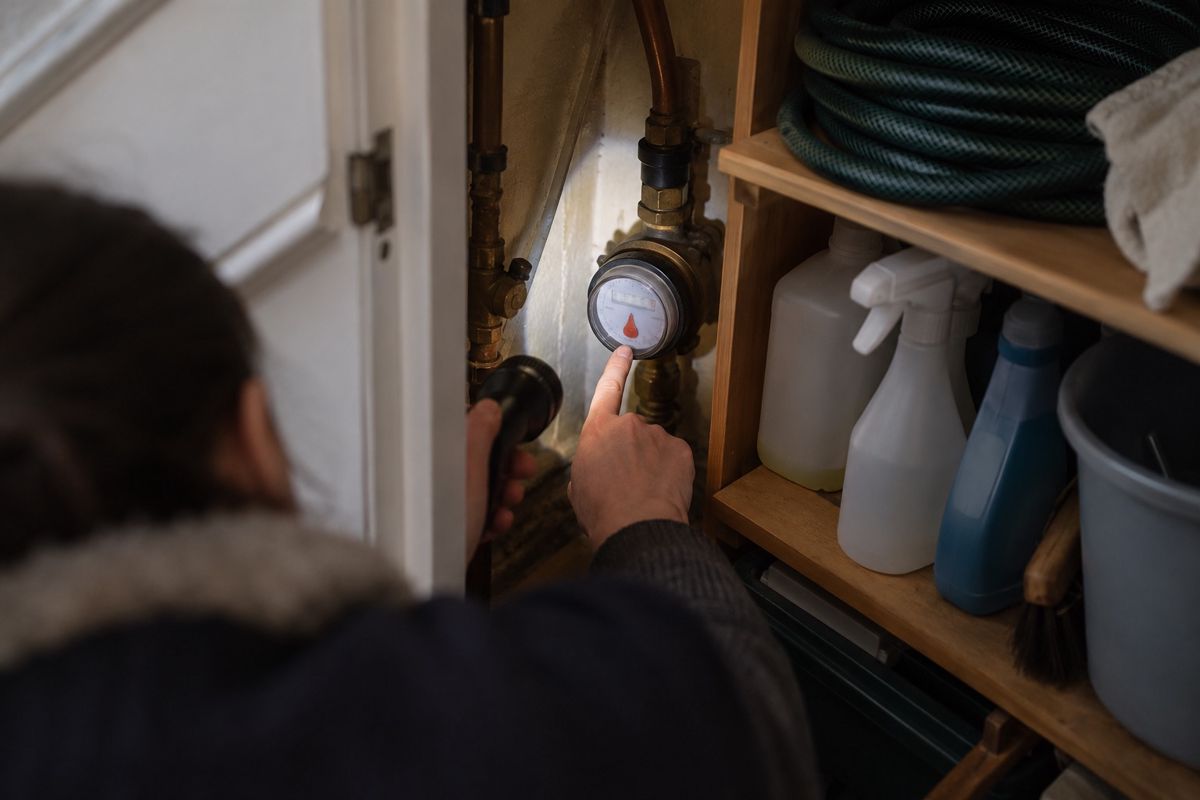
- A water meter dial that keeps moving when the house is quiet.
- A central heating system that keeps losing pressure and needs topping up.
One warm patch on a floor can point to a leak on a hot water pipe. A cold, wet patch points more often to the cold supply. Neither is a certain diagnosis, but both are worth taking seriously.
How can I test for a leak at home?
If you have a water meter, there is a simple check that costs nothing.
- Turn off every tap and make sure no appliance is running. That includes the washing machine, dishwasher and any automatic cistern.
- Read the meter, or watch the small dial that spins when water flows.
- Wait twenty minutes without using any water, then read it again.
- If the reading has changed or the dial is still moving, water is going somewhere.
Next, close the internal stopcock and check the meter again. If the dial stops, the leak is inside your property. If it keeps moving, the leak may be on the supply pipe between the meter and your stopcock, and you should contact your water company. If you do not have a meter, check the water bill for a sudden jump, and look at the ground outside for a damp patch.
Which London homes are most at risk?
Hidden leaks can happen anywhere, but some situations come up more often.
- Homes with solid ground floors. Houses from the 1930s onwards, and extensions of any age, often have pipes in or under concrete.
- Homes with old copper or iron pipes. Corrosion causes tiny pinhole leaks that build up quietly.
- Homes with underfloor heating. The pipework is out of sight by design, and a fault is harder to find.
- Flats in converted buildings. Long pipe runs through shared floors and walls mean a leak may damage a neighbour first.
- Homes in hard water areas. London water is very hard, and scale can speed up wear in older systems.
If your home is older, it may also have lead pipework in places. Lead does not cause leaks more than other materials, but it is a good reason to think about replacing a tired system, not just patching it.
What should I do if I think there is a leak?
Do not wait for a stain. Act as soon as you suspect something.
- Run the meter test above and note the result.
- Check the obvious sources first. A dripping tap, a running toilet cistern or a loose washing machine hose is far more common than a buried pipe.
- If you are sure there is a leak and cannot find it, turn off the stopcock when you are out or asleep to limit the damage.
- Take dated photos of any damp, staining or damage.
- Tell your insurer, landlord or managing agent, depending on your situation.
- Ask a plumber to trace the leak rather than guessing and pulling up floors.
If water is already coming through a ceiling or flooding a room, treat it as urgent and read our guide on emergency plumbing for the first steps.
How do plumbers find a leak under a floor?
A good plumber narrows the search before anything is opened. Acoustic listening picks up the sound of water escaping from a pipe. Thermal imaging shows warm patches where a hot pipe is leaking. Moisture meters map the wet areas of a floor and wall, and pressure testing isolates sections of pipe to see which one is losing water. Sometimes a harmless tracer gas is passed through the pipe and detected at the surface.
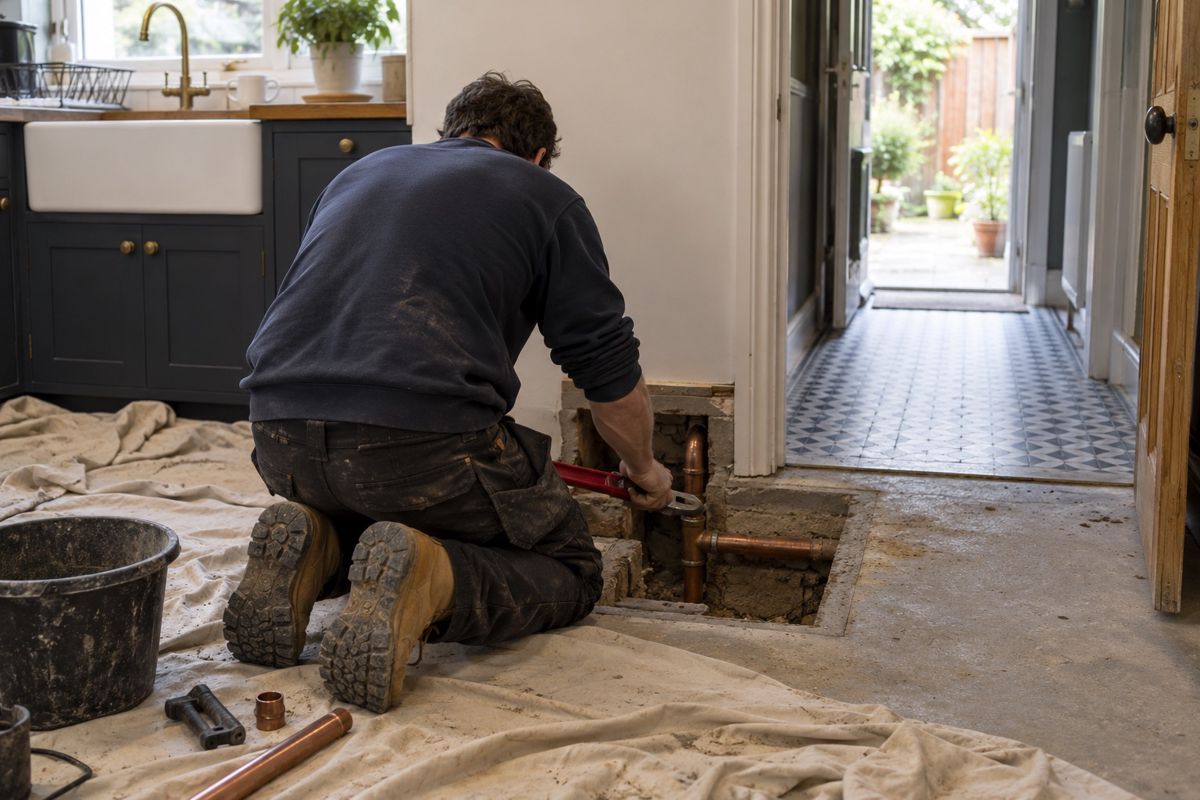
Once the position is known, a small hole is made, the pipe is repaired and the floor is made good. If the pipe is old or has failed more than once, the better answer may be to leave it in place and run a new pipe through a wall or ceiling void. That avoids breaking up the floor and makes future repairs easier. Ask for the options in writing, with an explanation of the disruption each one causes.
Who pays, and who needs to know?
This depends on your situation. If you own a house, you are responsible for the pipes inside your property. Many home insurance policies cover the cost of tracing a leak and sometimes the damage it caused, but gradual leaks are sometimes excluded. Read your policy and call your insurer before work begins.
If you rent, tell your landlord or letting agent in writing as soon as you notice a problem. Repairs to the pipework are normally theirs to organise. If you own a leasehold flat, check your lease. Water from your pipe can damage a neighbour's ceiling, and a leak in a shared pipe is usually a matter for the freeholder or managing agent.
When should I call a plumber?
Call as soon as the meter test shows movement with everything off, or when you see damp, warm patches or lifting floors that you cannot explain. A hidden leak is rarely an emergency in the first hour, but it gets worse every week it runs. Our page on slab leak detection and repiping explains how we trace leaks under floors and when new pipework is worth considering. You can also read about our other services on the home page.