
Skip to content
Open 24/7Upfront pricing
Call now 020 7946 0337
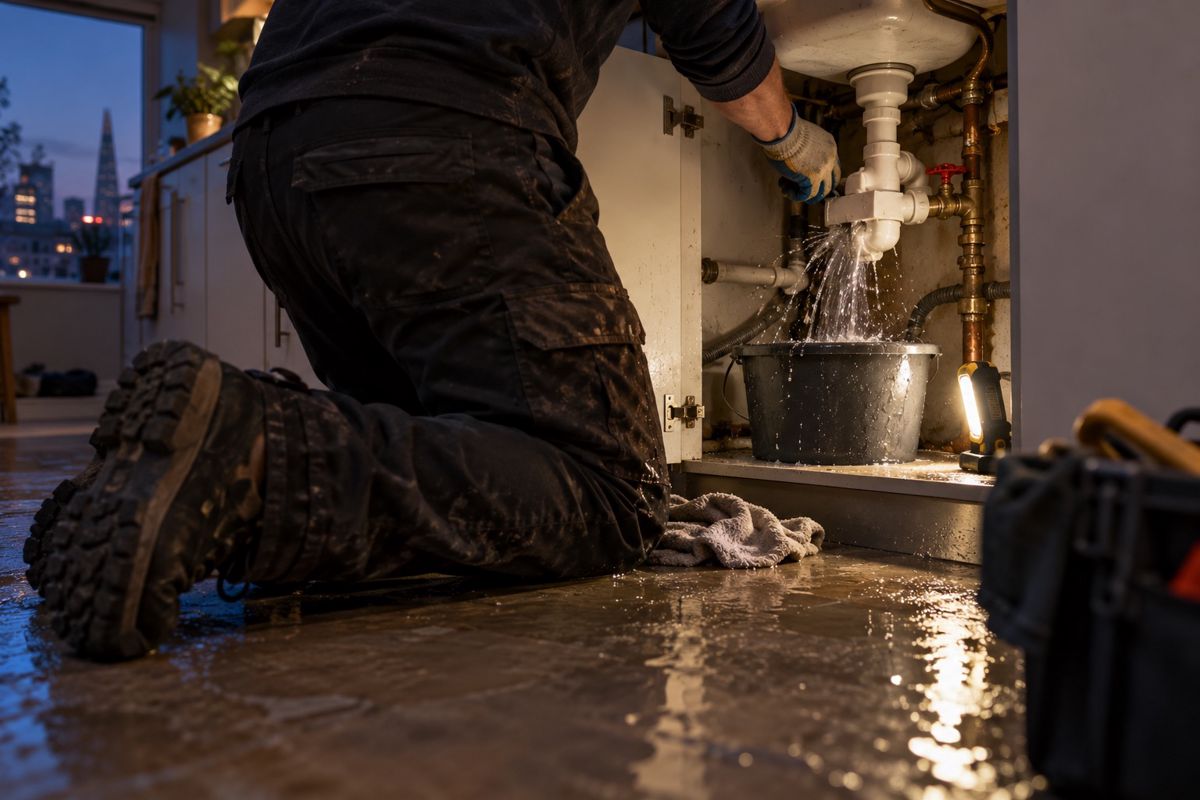
Hands turning off a stopcock under a flooded kitchen sink

Emergency plumbing in London

Emergency plumber London: burst pipes and sudden leaks

Water coming through a ceiling or a pipe that will not stop? Here is what to do in the first few minutes and how we deal with the repair.

  • Burst pipes, failed joints and overflowing tanks
  • Houses, flats and rented homes
  • A written quote before work starts
How soon do you need help?

What counts as a plumbing emergency in London?

A plumbing emergency is any fault where water or sewage is causing damage right now, or where the household has lost something it cannot safely go without. If you are searching for an emergency plumber London residents can call about a fault like this, these are the problems we are usually asked about.

  • A burst or split pipe that is spraying or running through a ceiling or wall.
  • A leaking or overflowing cold water tank in the loft.
  • A toilet or drain that is backing up into the house.
  • A pipe joint that has failed under a sink, bath or washing machine.
  • No water at all, or water that will not stop running.

A dripping tap or a radiator that needs bleeding can usually wait for a normal appointment. They are worth fixing, but they are not an emergency. If you are not sure which side of the line you are on, call and describe what you can see. Photos help.

What should I do first if a pipe bursts or a leak starts?

Stay calm and stop the water first. Every minute of flow means more damage to ceilings, floors and the flat below.

  1. Turn off the main stopcock. In most London houses and flats it sits under the kitchen sink or near the front door. Turn it clockwise until the flow stops.
  2. Open the cold taps to drain the pipes and flush the toilet once or twice.
  3. If water is near sockets, lights or the fuse board, switch the electrics off at the consumer unit, but only if you can reach it without standing in water.
  4. Move rugs, furniture and electrical items out of the way and put a bucket under any drip.
  5. Take photos for your insurer before you start clearing up.

If a ceiling is bulging with water, make a small hole at the lowest point with a screwdriver and let it drain into a bucket. It is safer than a sudden collapse. If you smell gas, leave the building, open doors on the way out and call the National Gas Emergency service from outside. Do not try to find the cause yourself.

Why do older London homes have so many sudden leaks?

London has a huge number of homes built before the 1950s, and the plumbing in them has often been added to, patched and rerouted over decades. A Victorian terrace may have original iron or lead pipework buried under a modern bathroom. A 1930s semi may have copper that has thinned with age. Conversions into flats add long pipe runs through shared floors and walls.

Common causes of a sudden leak here include:

  • Corroded joints on old copper and iron pipes.
  • Pipes in lofts, outhouses and under suspended floors that split during a cold snap.
  • Hard water scale that clogs valves and strains seals until they fail.
  • Flexible hoses on washing machines and basin taps that perish.
  • A leak from the flat above, which may be a matter for the freeholder or managing agent.

If water is coming through your ceiling from another flat, tell the neighbour first, then your landlord or managing agent, and check your lease. Our page on hidden leaks and repiping covers leaks you cannot see.

We do not quote prices on a web page because every fault is different, and a fair figure needs a proper look at the problem. These are the things that move the cost up or down.

  • How hard the pipework is to reach, for example behind tiled walls or under fitted floors.
  • Whether the parts are common or need ordering for an older fitting.
  • The time of day. Out-of-hours work usually costs more everywhere, so ask before you agree.
  • How much has to be opened up and made good afterwards.
  • Parking and access, which can add time in busy parts of the city.

Ask for the price in writing before work begins, and ask what is and is not included. A clear quote protects you from surprises, and it is how London Plumbing Co works.

What happens on the day, and how long does it take?

The plumber's first job is to stop the water and make the property safe. Then they trace where it is coming from. Many burst pipes and failed joints are repaired in a single visit. A leak hidden in a wall, floor or ceiling can take longer, because the area has to be opened carefully and closed up again.

Expect a plain explanation of what failed, what the repair involves and whether anything else on the same run of pipe looks near the end of its life. If a fix is only temporary, you should be told so clearly. Wet plaster and flooring need time to dry out, so decorating comes later.

Stay in touch with your insurer, since some home policies cover the cost of finding a leak and sometimes the damage it caused. Keep your photos and any invoice. If you live in a flat, let the managing agent know too. For a blocked or overflowing drain, see drain cleaning in London, or go back to the main page for our other services.

How it works

1

Call or tap for help

Tell us what is wrong. We answer around the clock.

2

Plumber dispatched

The nearest plumber heads your way with a stocked van.

3

Fixed with a written price

You approve the price before any work starts.

Open 24/7
Upfront pricing
Clear communication
Local plumbers

Request emergency plumbing

Tell us what you need and we call you back.

How soon do you need help?

No obligation.

Questions about emergency plumber in London

Where is the stopcock in a London flat or house?

In most London homes the internal stopcock is under the kitchen sink, in a utility room or in a cupboard near the front door. In older houses it may be in the cellar or under the stairs. Some flats share a supply, with the stopcock in a communal cupboard controlled by the managing agent. Find yours now, turn it both ways so it does not seize, and tell everyone in the household where it is.

Will my home insurance cover a burst pipe?

Many buildings and contents policies cover a sudden escape of water, but terms differ. Some have an excess and some exclude slow leaks. Read your policy or phone your insurer before you pay for repairs, and ask what evidence they need. Photos of the damage and the failed pipe, plus the plumber's invoice, usually help. If you rent, your landlord's policy covers the building, but you need your own cover for your belongings.

Who do I call first if the leak comes from the flat above?

Knock on the door of the flat above if it is safe to do so, because the cause may be a simple tap or hose that someone can switch off. Then tell your landlord, freeholder or managing agent, and contact your insurer. If the source is a shared pipe or the building structure, it is usually their job to arrange the repair. Keep dated photos and messages.

Can I fix a burst pipe myself with tape or a clamp?

A repair clamp or self-amalgamating tape can slow a small leak for a short time, but it is not a lasting fix. Pipes that have split because of corrosion or frost are often weak for some distance either side of the split. Use a temporary fix to buy time, keep the stopcock off if you can, and have the pipe properly repaired or replaced.

What should I have ready when I call?

Have the full address and postcode, a short description of what has happened, and whether you own, rent or lease the property. Say if the water is off at the stopcock and whether any electrics are affected. Photos of the leak and the damage help the plumber plan the right tools and parts. If you live in a flat, say which floor and whether the leak is reaching other homes.

Ready when you are. Call now or request a quote online.

Takes about 30 seconds. Request a plumber