
Skip to content
Open 24/7Upfront pricing
Call now 020 7946 0337
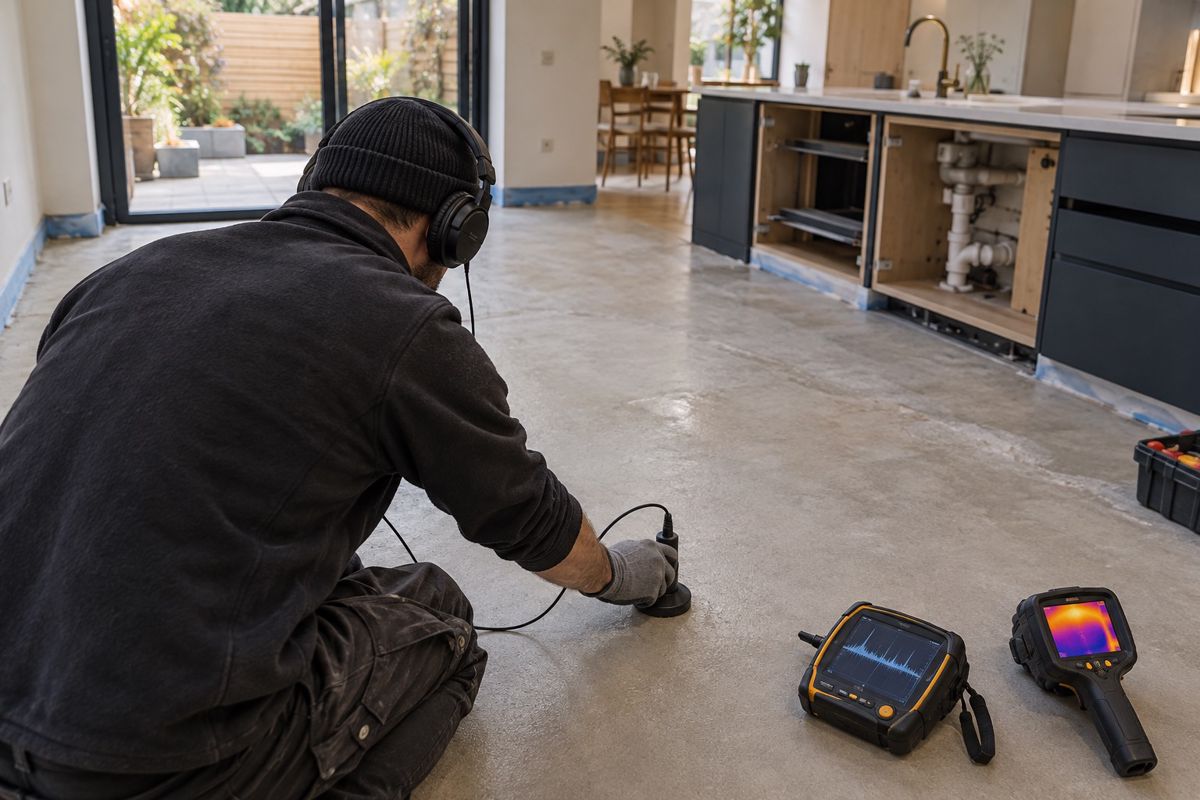
Plumber using leak detection equipment on a solid kitchen floor

Hidden leaks in London homes

Slab leak detection London: finding leaks under floors

A leak you cannot see can run for months. We explain the signs, how leaks are traced and when new pipework is the sensible answer.

  • Leaks under solid floors and inside walls
  • Lead, iron and ageing copper pipework
  • A written quote before work starts
How soon do you need help?

What is a slab leak, and does it happen in London?

Slab leak is an American term. In the UK we would say a leak in a pipe under, or inside, a solid concrete floor. It still matters here. Many ground floors in 1930s and later houses, in extensions and in converted flats are solid, with water pipes running through the screed or under the slab. When one of those pipes fails, the water has nowhere obvious to go.

Most Victorian and Edwardian houses have suspended timber floors instead. A leak there is easier to reach, but it can rot joists and floorboards before anyone notices. Underfloor heating pipes in newer homes add another route for hidden leaks.

If you are looking for slab leak detection London properties need, the aim is the same in every case. Find the exact spot with as little disruption as possible, then repair or replace only what needs it.

How do I tell if I have a hidden leak?

Hidden leaks give hints long before the water appears. Watch for these signs.

  • A water bill that rises with no change in how you live.
  • The sound of running water when every tap and appliance is off.
  • Damp, cold or warm patches on a floor, or carpet and laminate that feels wet.
  • Skirting boards that swell, floor coverings that lift, or mould along a wall base.
  • A musty smell that does not go away.
  • A heating system that keeps losing pressure.

If you have a water meter, try this. Turn off every tap and appliance, then check the meter dial. If it keeps moving, water is going somewhere. Switching off the stopcock and watching whether the dial stops tells you the leak is inside your property. Once you have found a leak, read our emergency plumbing page for what to do next.

How are leaks under a floor found?

Digging up a whole floor to look for a leak is expensive and unnecessary. Plumbers use methods that narrow the search first.

  • Acoustic listening - sensitive microphones pick up the sound of water escaping from a pipe.
  • Thermal imaging - a camera shows warm patches where a hot pipe is leaking into the floor.
  • Moisture meters - they map where the floor and walls are wettest.
  • Pressure testing - sections of pipe are isolated and tested to see which one loses pressure.
  • Tracer gas - a harmless gas is passed through the pipe and picked up at the surface.

Once the position is clear, a small area is opened, the pipe repaired and the floor made good. In some homes the better answer is to abandon the buried pipe and run a new one through a wall, a ceiling void or a boxed-in route. That avoids breaking up a floor and makes the next repair easier.

Repiping means replacing old pipework with new. It makes sense when one leak is a sign that the whole system is tired, or when the material itself is the problem. Think about it if you have:

  • Repeated leaks in different places over a short period.
  • Pinhole leaks in copper, which are a sign of corrosion.
  • Old iron pipes that restrict flow and stain the water.
  • Lead pipes, which were widely used in homes built before the 1970s.

Lead needs particular care. If you think you have a lead pipe, ask your water company about testing the water and about replacing the supply pipe. They are normally responsible for their part, and you are responsible for the pipe inside your property. Many London homes have been partly updated, so the lead may sit in a stretch you cannot see.

Hard water can also speed up corrosion in older systems, as we explain on our water heater repair page.

What changes the cost, and how long does it take?

We do not publish prices, because the work varies widely. The main factors are how many pipes need replacing, how accessible they are, whether floors and walls must be opened, and what has to be made good afterwards. A flat with short pipe runs is a very different job from a three-storey terrace.

Finding and repairing one leak is often a matter of a day or two, plus drying time. Repiping a whole home takes longer, and the water is off for parts of it. A good plan will phase the work so that you keep a working toilet and kitchen tap where possible.

If you rent, speak to your landlord first. If you own a leasehold flat, work that touches shared pipes or the structure needs consent from the freeholder or managing agent. We give a written quote that describes what is included. To see everything else we cover, return to the home page.

How it works

Call or tap for help

Tell us what is wrong. We answer around the clock.

Plumber dispatched

The nearest plumber heads your way with a stocked van.

Fixed with a written price

You approve the price before any work starts.

Open 24/7
Upfront pricing
Clear communication
Local plumbers

Request slab leaks and repiping

Tell us what you need and we call you back.

How soon do you need help?

No obligation.

Questions about emergency plumber in London

Can a leak under a floor damage my home without any visible sign?

Yes. Water can soak into screed, insulation and subfloor for a long time before a stain appears. Over months it can lift floor coverings, rot timber, feed mould and weaken the ground beneath. That is why an unexplained rise in your water bill, or a meter that moves when everything is off, is worth chasing quickly.

Will my home insurance pay to find a hidden leak?

Some policies pay for the cost of tracing a leak, and some also cover the damage it causes, though gradual leaks are sometimes excluded. Call your insurer before work starts, ask what they need to see, and keep the leak detection report, photos and invoices. If you rent, tell your landlord, who may have their own cover for the building.

Do I have to dig up my whole floor to fix it?

Not usually. Once the leak has been traced, a small hole is made at that point and the pipe repaired. If the pipe is old or leaks keep returning, it may be better to reroute it through a wall or ceiling void. A plumber should explain the options and the disruption each one involves before you agree.

How do I know if I have a lead pipe?

Lead is soft and dull grey. A scratch with a coin shows a shiny silver mark underneath, and a magnet will not stick to it. It is often found where the supply enters the house. If you suspect lead, contact your water company about testing the water, and ask a plumber to check the pipework inside the home. Do not drink water that has stood in a lead pipe overnight without advice.

Can I just fix a leaking pipe and avoid repiping?

Often yes. If the pipe is otherwise in good condition, fixing one leak is sensible. If the same pipework leaks again and again, or shows widespread corrosion, patching becomes an expensive habit. Ask your plumber to explain the condition of the rest of the pipework so you can compare repair now with replacement later.

Ready when you are

Call now or request a quote online.

020 7946 0337
Takes about 30 seconds. Request a plumber