
Skip to content
Open 24/7Upfront pricing
Call now 020 7946 0337
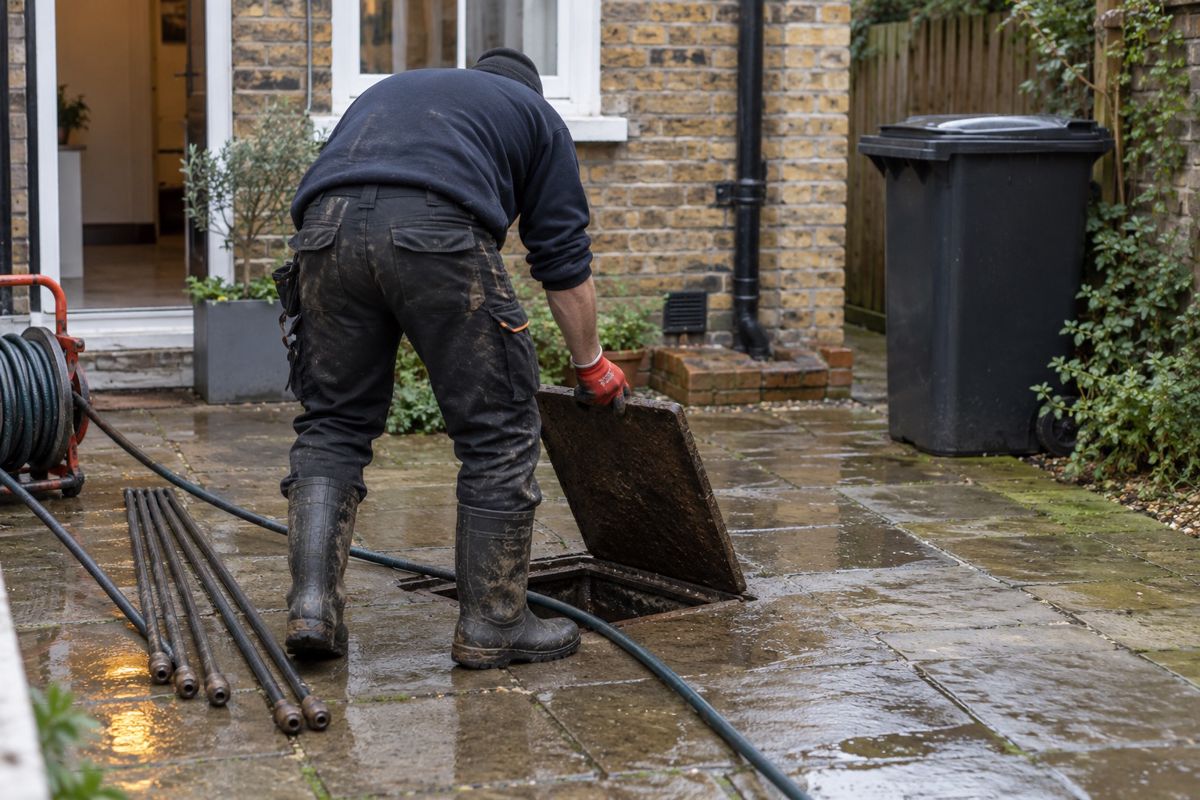
Technician clearing a drain in a London terrace back yard

Blocked drains in London

Drain cleaning in London for slow sinks and blocked toilets

A drain that keeps backing up usually has a cause. We clear the blockage, then look at why it formed so it stays clear.

  • Sinks, baths, toilets and outside gullies
  • Rodding, jetting and camera checks
  • A written quote before work starts
How soon do you need help?

What does drain cleaning involve?

Drain cleaning means removing whatever is stopping water from flowing away. The method depends on what the blockage is and where it sits. If you need drain cleaning London properties have a few standard options.

  • Plunging and trap clearing for a sink, basin or bath blocked close to the plug hole.
  • Drain rods for pushing through a blockage in the main run, such as a toilet that will not flush away.
  • High-pressure water jetting for grease, scale and packed debris on the pipe walls. This is also called hydro jetting.
  • A camera survey to see inside the pipe, find the real cause and check its condition.

Jetting is powerful, and it is not right for every pipe. Brittle old clay or damaged pipes can be harmed by too much pressure, so a camera look first is often sensible.

Why do drains block in London homes?

The usual causes are simple, though London adds a few of its own.

  • Cooking fat and grease that cools and sets inside the pipe.
  • Wet wipes, including ones sold as flushable, which do not break down.
  • Hair and soap scum in baths and showers.
  • Leaves and silt in outside gullies, especially after autumn.
  • Tree roots reaching into old joints. London streets and gardens have a lot of mature trees.
  • Cracked, sagging or displaced pipes. Many Victorian homes still have original clay drains, and older joints can slip over time.

Hard water also builds scale inside waste pipes, which narrows them and catches debris. If one fixture is slow, the problem is probably local. If several are slow at once, or a ground floor toilet gurgles when you run the washing machine, the main drain is more likely to be the cause. When water is already backing up, see our emergency plumbing page.

Is the blockage in my drain or the public sewer?

This matters because it decides who has to fix it. Your own drain runs from the house to the point where it joins a shared drain or the public sewer. In many terraces and flats the drain is shared with neighbours before it reaches the street.

As a rough guide, the water company is responsible for public sewers and, in most cases, for shared drains outside your property boundary. You are responsible for the pipes inside your boundary that serve only your home. The details differ from house to house, so check with your water company before you pay for work on a shared or outside drain.

A simple test is to lift the nearest manhole cover, if it is safe to do so. If the chamber nearest the house is empty but the next one is full, the blockage is probably further along. For damage rather than a blockage, read about sewer line repair.

We do not publish prices, because a blocked basin trap and a blocked main drain are very different jobs. These are the factors that move the cost.

  • Where the blockage is, and how many access points there are.
  • How hard the blockage is, for example soft debris compared with packed roots.
  • The method needed, from rods to jetting and a camera survey.
  • Whether the blockage keeps returning, which points to damage or a design fault.
  • Access, including tight yards and basement flats.

Ask for the quote in writing and ask what happens if the first method does not work. A repeat blockage within a short time is a sign that the pipe needs a closer look.

How long does it take, and what happens on the day?

Many simple blockages are cleared within a visit. A longer or deeper blockage, or a job needing a camera survey, can take more time. The plumber will start by finding the access point and checking which fixtures are affected, then clear the blockage and run water through to prove it flows freely.

If a camera is used, you can usually be shown what it found. You may see roots, scale, a crack or a displaced joint. That is useful, because clearing a blockage without fixing the cause often means it comes back.

Expect the area to be left clean, and expect advice on how to stop it happening again, such as binning fat and wipes and keeping gullies clear. For other services, go back to the home page.

How it works

Call or tap for help

Tell us what is wrong. We answer around the clock.

Plumber dispatched

The nearest plumber heads your way with a stocked van.

Fixed with a written price

You approve the price before any work starts.

Open 24/7
Upfront pricing
Clear communication
Local plumbers

Request drain cleaning

Tell us what you need and we call you back.

How soon do you need help?

No obligation.

Questions about emergency plumber in London

How do I stop my drains blocking again?

Do not pour fat, oil or grease down the sink. Wipe pans with kitchen paper first. Put only toilet paper down the toilet, and bin wipes, even those sold as flushable. Use a hair catcher in the shower and keep outside gullies clear of leaves. If a drain blocks repeatedly, ask for a camera check, because damaged pipes catch debris far more easily.

Can I use drain cleaning chemicals?

Occasional use on a light sink blockage may help, but strong chemicals can damage old pipes and are hazardous to handle. They are also a problem if a plumber has to work on the pipe afterwards, so tell them if you have used any. A plunger or a simple trap clean is a safer first step. For a toilet or a main drain, chemicals rarely work.

Is hydro jetting safe for old Victorian drains?

It can be, but it depends on the condition of the pipe. Sound clay pipes usually cope with a controlled jet. Cracked, collapsed or poorly jointed pipes can be damaged by high pressure. A sensible plumber looks with a camera first or uses a lower pressure, and explains why. If you are unsure, ask what pressure will be used and why it suits your drain.

My toilet gurgles and the bath is slow. What does that mean?

When several fixtures are affected together, the blockage is usually in the shared part of the drain, not at one sink or toilet. Air gets pushed back through traps and makes gurgling sounds. Stop using water where you can, since a full drain can overflow at the lowest point. Then have the main run checked, with a camera if possible.

Who pays if the blockage is in a shared drain?

It depends on where the blockage sits. In general the water company looks after public sewers and shared drains outside the boundary, while the owner looks after pipes inside it that serve only their home. If you are in a flat, the freeholder or managing agent may be responsible. Contact the water company first and keep a record of what you were told.

Ready when you are

Call now or request a quote online.

020 7946 0337
Takes about 30 seconds. Request a plumber