
Skip to content
Open 24/7Upfront pricing
Call now 020 7946 0337
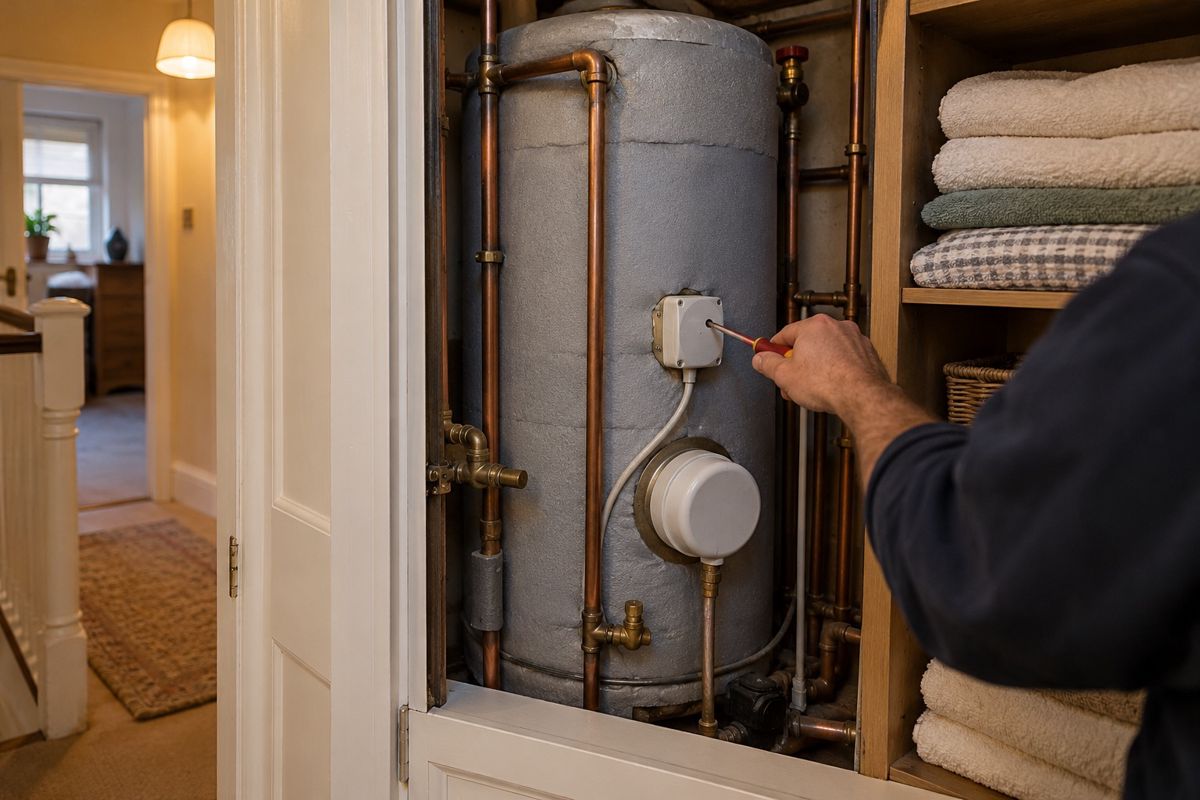
Hot water cylinder in an airing cupboard being repaired

Hot water in London homes

Water heater repair in London for cylinders and electric units

No hot water, lukewarm showers or a cylinder that leaks? We look at the cause first, then explain whether to repair or replace.

  • Cylinders, immersion heaters and electric heaters
  • Hard water scale checked as a likely cause
  • A written quote before work starts
How soon do you need help?

What does water heater repair involve in a London home?

Most people in the UK say hot water cylinder, immersion heater or boiler rather than water heater. The job is the same either way. For water heater repair London homes have a handful of common set-ups, and the right fix depends on which one you have.

  • Hot water cylinder - a tank, often in an airing cupboard, heated by a boiler coil, an immersion heater or both.
  • Unvented cylinder - a sealed, mains-pressure cylinder with safety valves that need correct handling by someone with the right qualification.
  • Electric instantaneous heater - a small unit that heats water as it flows, often under a sink or inside an electric shower.
  • Combi boiler - heats water on demand with no tank and also runs the heating.

Work that involves gas, including most boiler repairs, must be carried out by a Gas Safe registered engineer. Ask to see their ID card and check the register yourself before anyone starts.

Why has my hot water stopped or gone lukewarm?

There are a few usual suspects, and some are quick to check before you call anyone.

  • The programmer or timer has been knocked or reset.
  • A switch or fuse has tripped on the consumer unit, which can switch off an immersion heater.
  • The cylinder thermostat has drifted or failed.
  • An immersion heater element has burned out, often because of scale.
  • A motorised valve has stuck, so the boiler is not sending heat to the cylinder.
  • On a combi boiler, low pressure or a scaled heat exchanger is cutting the hot water flow.

If the cylinder is leaking from the body or the base, switch off the heater, close the supply and call for help. A hole in a tank cannot be repaired. If water is spreading, treat it as an urgent job and read our emergency plumbing page for the first steps. Never open or tamper with the safety valves on an unvented cylinder.

How does London's hard water affect hot water systems?

London water is among the hardest in England. It carries a lot of dissolved calcium and magnesium, and heat turns those minerals into scale. Scale coats immersion elements, clogs shower mixers and thickens inside the heat exchanger of a combi boiler.

Signs to watch for include:

  • A kettle or heater that makes a rumbling noise.
  • Weak flow from showers and mixer taps.
  • White crust around taps and shower heads.
  • Elements that fail again and again.

Descaling or replacing the part often brings things back to normal. A scale inhibitor or a water softener can slow the problem down, but they have costs of their own, so ask for independent advice before you buy one. If your pipes are old too, see our page on repiping and hidden leaks, because scale and corrosion often go together.

A repair makes sense when the fault is one failed part and the rest of the system is sound. Replacing an element, thermostat or valve is usually modest work. Replacement makes more sense in these cases:

  • The tank itself is leaking.
  • The same cylinder has failed several times in a short period.
  • The cylinder is very old, badly scaled or poorly insulated, so it wastes energy.
  • Parts are no longer made for it.

Space matters in London. Many flats have a tiny airing cupboard, and some have no room for a tank at all. In that case an on-demand electric water heater may suit a small household, though it needs a suitable electrical supply. Your plumber should explain the trade-offs, including running costs, before you decide. If you rent, your landlord is normally responsible for hot water, so tell them first.

What changes the cost, and what happens on the day?

The price depends on the type of system, whether the part is common, how easy the cylinder is to reach and whether it needs draining down. Replacing a whole cylinder costs more than replacing an element, and a job in a loft or a tight cupboard takes longer. We give you a written quote before work starts.

A simple element or thermostat swap is often finished in one visit. A cylinder replacement takes longer because the old unit is drained, disconnected and carried out, and the new one is fitted, filled and tested. On the day, expect the water to be off for part of the visit, so fill a kettle and a few bottles beforehand.

Afterwards you should be shown the isolation valves, the thermostat setting and what to watch for. For an overview of everything we do, go to the home page.

How it works

Call or tap for help

Tell us what is wrong. We answer around the clock.

Plumber dispatched

The nearest plumber heads your way with a stocked van.

Fixed with a written price

You approve the price before any work starts.

Open 24/7
Upfront pricing
Clear communication
Local plumbers

Request water heaters

Tell us what you need and we call you back.

How soon do you need help?

No obligation.

Questions about emergency plumber in London

Is a water heater the same as a boiler?

Not quite. A boiler heats water for the radiators and often for the taps too. A water heater, in UK terms, usually means a hot water cylinder or an electric unit that only heats water for taps and showers. A combi boiler does both jobs without a tank. Work on gas boilers must be done by a Gas Safe registered engineer.

Why does my immersion heater keep tripping or failing?

The most common cause in London is scale on the element. Hard water coats it, makes it overheat and shortens its life. A faulty thermostat or a damaged element can also trip the circuit. Replacing the element is usually straightforward, but if it keeps happening, ask for the cylinder and the wiring to be checked. Electrical faults are a safety matter, so do not ignore repeat tripping.

My combi boiler loses pressure. Is that a hot water problem?

It can be. Low pressure often means a small leak on the heating side or a faulty expansion vessel, and it can reduce hot water flow. You can top up pressure using the filling loop if you know how. If it drops again within days, the cause needs finding. Any repair that involves gas or boiler internals must be done by a Gas Safe registered engineer.

Can a water softener fix limescale problems?

A softener removes the minerals that cause scale, so it can help appliances and fittings last longer. It needs space, electricity, salt and servicing, and not every home has room. A cheaper scale inhibitor reduces scale without removing the minerals. Ask a plumber what suits your home, and compare running costs before you commit.

Who is responsible for hot water in a rented flat?

In most tenancies the landlord is responsible for keeping the hot water supply and heating in working order. If it stops, report it in writing and keep a copy. Do not order repairs yourself without agreeing it with them first, or you may struggle to recover the cost. If it is not fixed, your local council's housing team can advise.

Ready when you are. Call now or request a quote online.

Takes about 30 seconds. Request a plumber